Greetings in the warmest possible way to you today. Thank you for arriving to read this post and double thanks to those who gift me with their thoughts in a comment at the bottom of the post. Sincerely I mean that.
Anyone who had taught someone else knows that it means you need to learn that “thing” even better in order to teach someone.
In the same vein, in order for me to give a condensed 7.5 minute speech I need to have a fairly good handle on it to condense it down so I can share it in a very brief conversation with an audience. I tried my best on this topic.
Recently that topic was explaining “Diminishers” and Illuminators” as discovered by David Brooks in his book “How to Know a Person“.
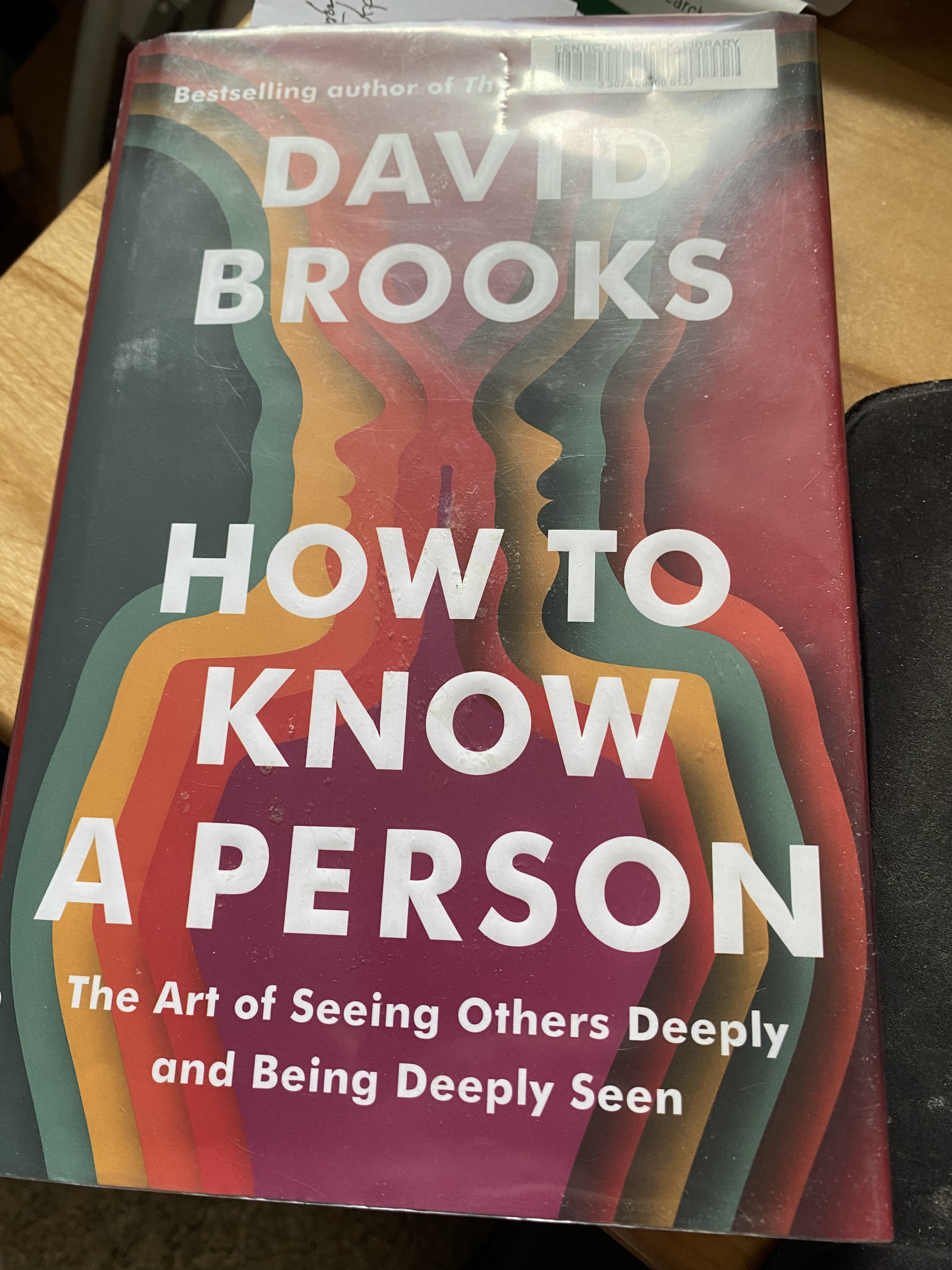
I heard him on Youtube and he seemed clever and well-spoken but he described himself as having the “social skills of a head of a cabbage”. He was committed to learn more and he states that is what writers do – learn and share what they learn.
He discovered in the course of researching his book that in society today there large numbers of people who feel unseen and misunderstood.
In his book “How to Know a Person” he identifies that there are two broad categories of humans with respect to human interaction.
You can identify which of them you are interacting with by how they make you feel.
Diminishers, who might be oblivious to how they are acting, and decent people can make others feel insignificant or even invisible.
Illuminators are those people who put a cloud under your feet and you walk away afterwards with a smile inside and out.
♥Illuminators are uplifting, you feel valued in their eyes, they are focused on the other person. They make you feel special, heard, respected, noticed and valued.
David Brooks set out to become an illuminator and help others as well.
I confess I have not finished the book, partly because it is so well written I find myself re-reading portions. If it wasn’t a library book – I would have attacked it with a highlighter by now.
In my recent speech at Toastmasters I shared the behaviors of Diminishers and Illuminators.
Diminishers:
- They are quiet, they are seeing you but they aren’t curious. They don’t ask for more detail.
- They talk too long and dominate the conversation. They may ask a question but are really quick to return the conversation to themselves. The words of their chat are filled with “I, me, mine, my”.
- They are insensitive to what they are told. They neither celebrate, empathize with what they hear you say and don’t ask follow-up questions. They are on their phones! They don’t make eye contact. While “listening” they are watching something else.
- Diminishers interrupt which causes speakers to feel disrespected and unheard.
Illuminators
- They are conversation cheerleaders, David Brooks calls them Loud Listeners. They are asking questions for more detail, colour? Taste? Yay! Speakers feel the listeners attention. Illuminators are curious.
- Illuminators talk, sharing is important for them also but they don’t dominate the conversation. They replace “I, me, mine, my” with “you”. They say things like “I am sure you can relate, or You probably have had a similar experience, or I am interested in your thoughts.
- They are acknowledgers. They welcome you standing, and bid you good-bye standing. They wave, and fist bump, they dance up and down are filled with enthusiasm that is sincere and genuine. Even if they are busy, they find a way to wave and acknowledge you when they see you.
- Illuminators do not interrupt. They do not reply to what you say but they respond. They respond by echoing or paraphrasing what you said to show they were listening and to ensure they understood.
Now that took nearly seven minutes of my speech to explain the behaviors of each and do my opening and so I had thirty seconds to wrap up.
Which I did with my condensed version of behaviors that I would try to remember to do better in my interactions in the future.
Firstly – wait two seconds before speaking when listening to someone.
Secondly – not reply but echo what I heard to share what I think I heard.
Thirdly – Smile and ask if I got it right?


I think the proverb ‘ Be Slow to speak, and Quick to Listen” is a wise motto.
But David Brooks goal is not to help us become good listeners but instead better conversationalists. He explains that a good conversationalist leads people to a mutual expedition toward understanding so that both participants are uplifted and enriched, (Perhaps being an illuminator is the first step?)
“The real act of, say, building a friendship or creating a community involves performing a series of small, concrete social actions well: disagreeing without poisoning the relationship; revealing vulnerability at the appropriate pace; being a good listener; knowing how to end a conversation gracefully; knowing how to ask for and offer forgiveness; knowing how to let someone down without breaking their heart; knowing how to sit with someone who is suffering; knowing how to host a gathering where everyone feels embraced; knowing how to see things from another’s point of view.”
― David Brooks, How to Know a Person: The Art of Seeing Others Deeply and Being Deeply Seen
Thanks for reading, – see you next time♥
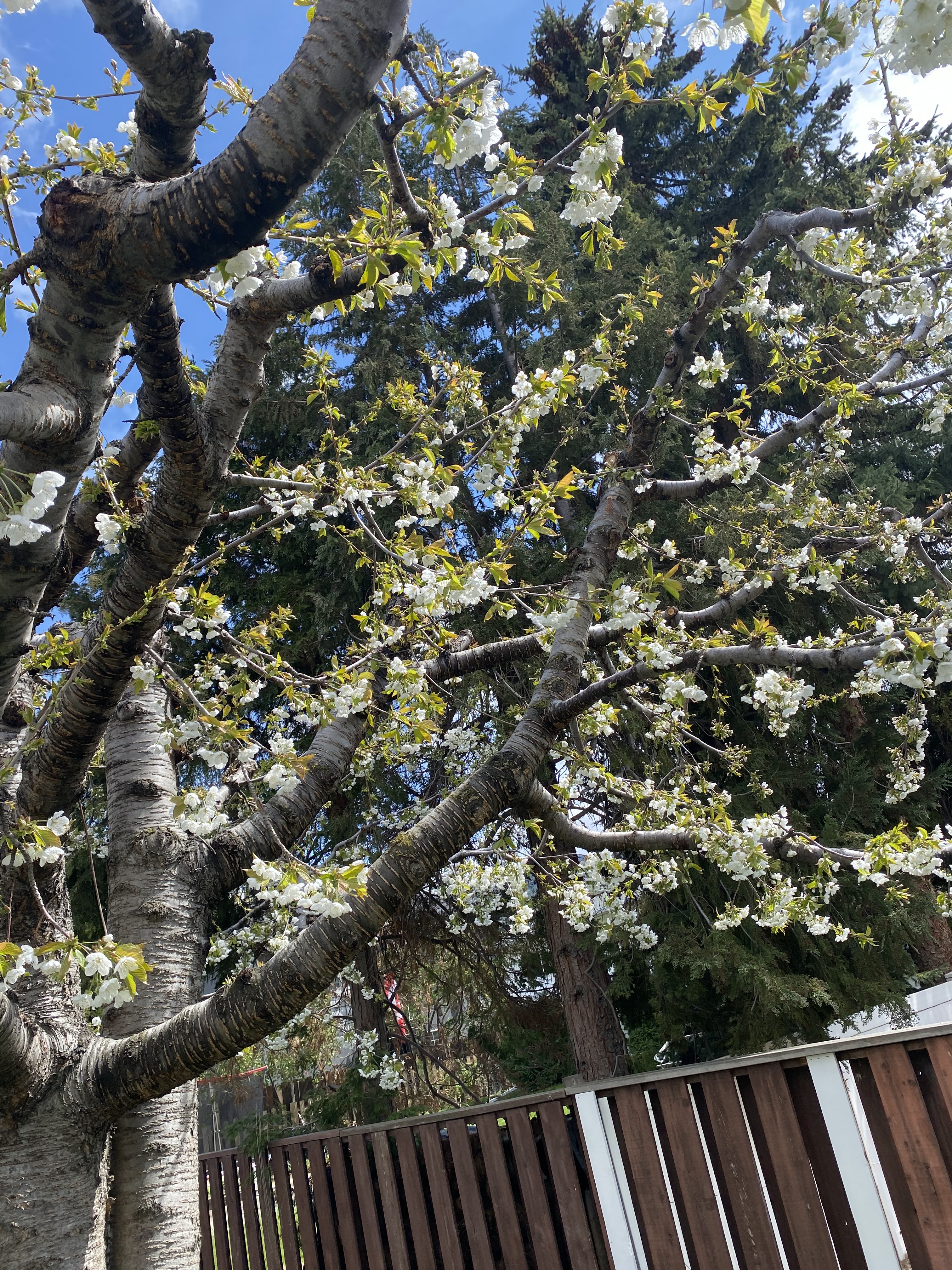
I am happy to report the warm weather of Easter opened up the cherry blossoms on my tree and hopefully this is symbolic to all of us having a fruitful spring.
Best wishes truly, Dave
PS – Let me know what you think below. ♥